






THE TRUE ESSENCE OF CASHMERE
On this page, you’ll discover what makes cashmere so special, how it’s different from regular wool, and why, with the right care, Rovero Cashmere pieces actually get better with every wear.
The precious fiber that blends softness, warmth, and timeless durability
Cashmere isn’t just a fiber — it’s the result of an ancient craft born in the coldest highlands of Asia, where goats grow an incredibly fine, insulating undercoat.
Light, warm, and unbelievably soft to the touch, every thread tells the story of nature’s care and human skill turning it into luxurious garments.

ORIGIN & KEY FEATURES
Cashmere is a natural protein fiber collected from the undercoat of the Capra Hircus goat, raised in regions with extreme temperature swings between day and night.
To protect themselves from the intense cold, these goats grow an inner layer of extremely fine, insulating fibers, harvested during their natural spring molt.
What sets cashmere apart from other wools is primarily the fiber diameter, typically between 14 and 19 microns. The finer the fiber, the softer it feels and the better it traps air, creating natural thermal insulation.
This structure makes cashmere warm without weighing you down, and breathable even in heated environments.

FIBER LENGTH & ELASTICITY
Another key factor is fiber length. Longer fibers make stronger yarns, less prone to breakage, and less likely to pill. That’s why sourcing the right raw material is so crucial to the quality of the final garment.
Cashmere is also naturally elastic and hygroscopic: it can absorb moisture without feeling wet to the touch, keeping you comfortable and helping regulate temperature.
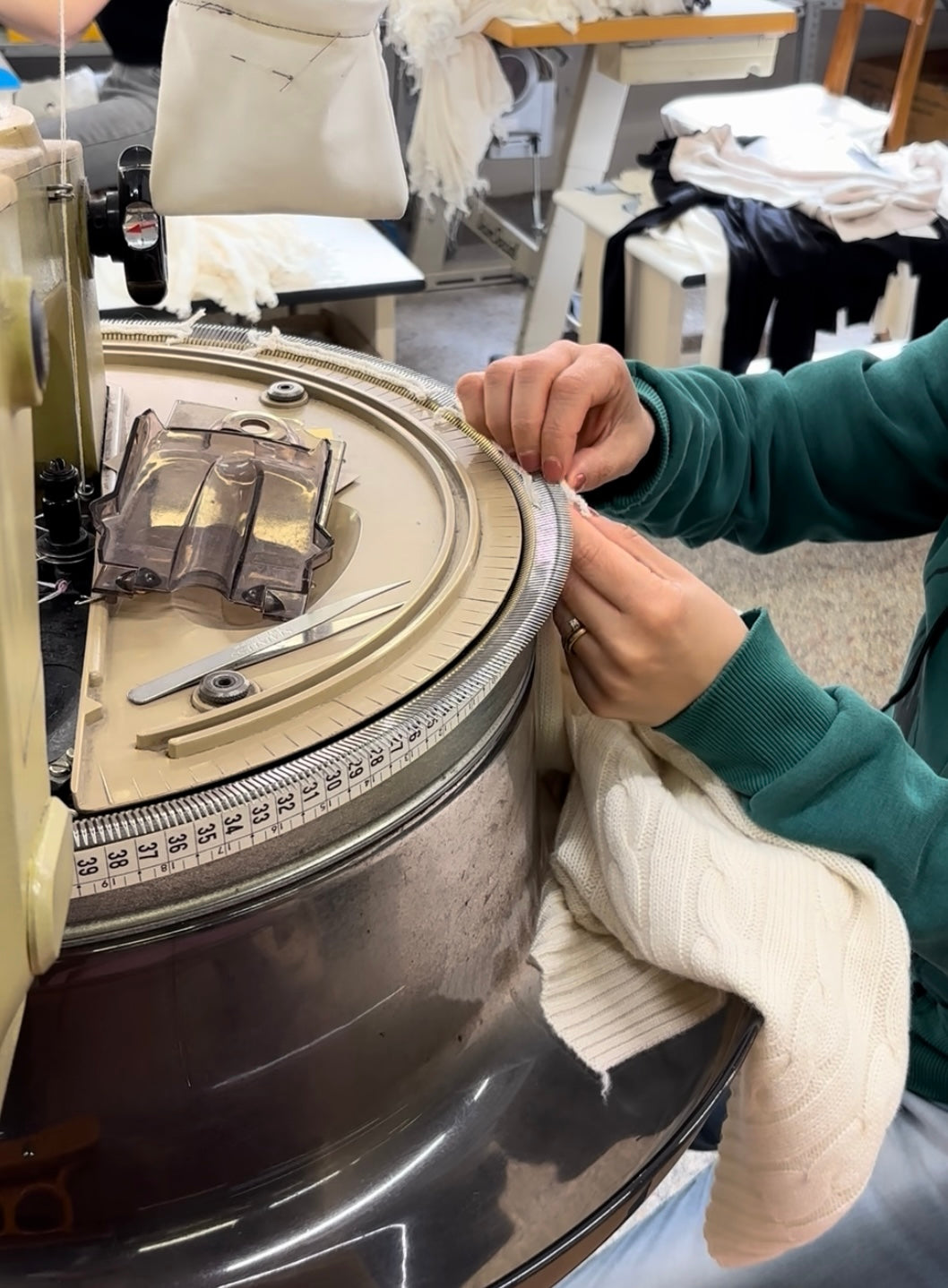
The quality of a cashmere piece isn’t just about fiber fineness, it’s the combination of spinning, yarn twisting, knitting, and finishing techniques. Well-crafted cashmere holds its shape, softness, and stability over time and actually improves with use.

